
Historian W. Scott Poole makes a potent case for the 1924 film The Hands of Orlac as an aftershock of World War I. Reflecting the psychic tremors of a battle where bodies and minds were warped and destroyed, humans reduced to automatons and warped into psychological and physical pieces, the 1924 film severed a pianist’s hands and depicted the terror of the body seemingly working at odds from the mind that was supposed to control them. The 1924 film was directed by Robert Wiene and starred Conrad Veidt (both of The Cabinet of Dr. Caligari a few years beforehand), perhaps the first burst of Hollywood engagement with German Expressionist shadowplay, the surest throughline between Weimar horrors and the rise of the Universal Horror Monsters that would cast a long pall on horror cinema. Perhaps aware that it could all-too easily be seen as an also-ran, 1935’s Mad Love is a nominal remake thatreframes the story entirely. If The Hands of Orlac laments the violence of returning soldiers, Mad Love is very much about those who never went to war, for whom the war was a theater to watch and, perhaps, violently obsess over.
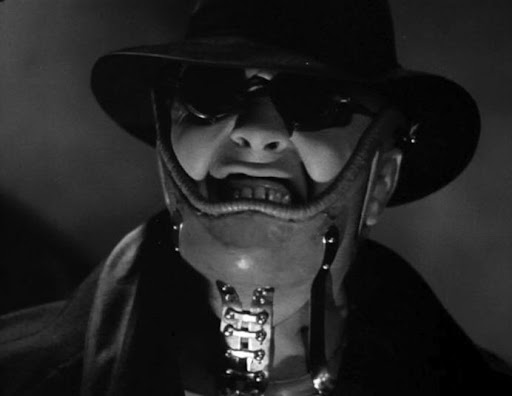
While the original story focuses on the plight of talented pianist Stephen Orlac (played, in this 1935 version, by Colin Clive), who loses his hands in a train accident and has them replaced with a murderer’s (Rollo, here played by Edward Brophy), this version shifts to Peter Lorre’s Dr. Gogol (Peter Lorre), the doctor who performs the operation and is infatuated with the pianist’s wife Yvonne Orlac (Frances Drake). Gogol, who houses a mannequin of Yvonne, fancies her Galatea to his Pygmalion, borrowing from the Greek play about an artist that conjures their sculpture to life via sheer artistic ability infused with the incantatory potency of desire. This last dynamic marks Mad Love as a deeply tormented meditation on the relation between creation and control. Rather than a performer-soldier, Gogol is a tragic mastermind-director, longing for something he can only domineer from behind the scenes.
Poetically, then, Mad Love is also a kind of breathful last gasp of desire from both its star and its director, two souls who would sit on the sidelines of Hollywood after initially promising careers. Lorre is simply remarkable as the tortured doctor-artist, a barely restrained fount of psychological desire whose compassionate nervousness bubbles with undercurrents of genuine malevolence. Shifting the perspective to the less obvious creative type ultimately extends the metaphor to even those who sit on the sidelines, and Lorre radiates an anxious, nasty despondency that remains always just on the precipice of twitching into a desire to violently assert himself onto others he feels superior to.
Of the many expatriates who escaped Germany’s rising fascism and took up residence in Hollywood, director Karl Freund was particularly ill-served. After the remarkably atmospheric The Mummy (perhaps not as well directed as James Whale’s films, but arguably the most genuinely terrifying of the classic Universal Horror pictures), Mad Love was his second and final directorial effort. Working with the remarkable Gregg Toland (and Chester A. Lyons) as cinematographer, Mad Love is a direct line from Freund’s early work shepherding the German Expressionist cinema into the realm of the “unchained camera” to Toland’s later cinema-shifting noir on Citizen Kane. The blistering lights shining on Lorre’s bald-shaved head mark this text as a shift from German Expressionism, and its architectural anticipations of the cavernous soul-palaces of Toland’s Citizen Kane suggest characters dwarfed by the desolate mausoleums of their unreciprocated longings.
Remarkably, Mad Love is both a canvas of wide, human-swallowing spaces and perilous close-ups on human flesh that suggest excisions of cinema as severances of the body. Toland and Freund particularly focus on faces and hands, not only the pianists but a man holding a cigarette for a doomed man on a train, and the soon-to-be-dead man’s hand casually peeling an apple with calm malevolence that will metastasize into almost religious zeal when he finally confronts his imminent demise. The fragmented close-ups themselves become a perverse means of severing and reconnecting body parts in unexpected fashion, bespeaking a truth about the violently creative nature of art. Like a Robert Bresson film, we get a work that is obsessed with the doing-hand, but, like a Carl Dreyer work, this film is also infatuated with the ambiguities of the human face. And with the dangers of obsessing over that face.
Art, indeed, is a fount of pure potentia in Mad Love, a creative delusion that dangles over madness. A mannequin becomes a living performer, a performer becomes a mannequin. Near the film’s end, Yvonne has to play the mannequin to hide from Gogol, but Freund has already rendered that binary murky by visualizing Drake as the mannequin every time she is viewed from Lorre’s eyes. Cinema’s capacity to bring art to life, to animate the still, to generate a feeling of connection and present-tenseness, becomes a deeply ambivalent line, a fount of hope and manna for violence. Cinema begets life here, but it also provides an excuse to take it.
Score: 8/10
 The Long Take