
The Fall of the House of Usher
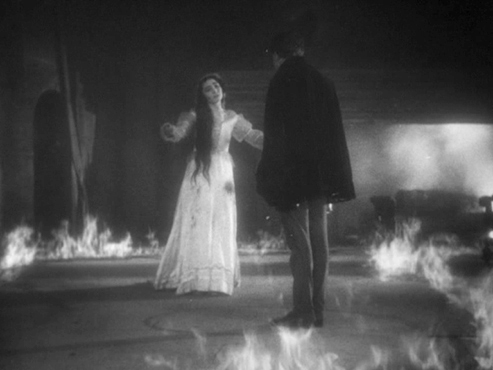
Jean Epstein and Luis Buñuel’s adaptation of Edgar Allen Poe’s short story The Fall of the House of Usher, in no uncertain terms, does not meaningfully understand the themes of the Poe story at all. Yet, at the same time, it absolutely nails the texture of it, even as it mutates that texture to alternative ends. Eschewing the story’s haunting, morbid diagnosis of humanity’s capacity for obsessive monomania, Epstein’s film evokes a romantic mood of sepulchral loss and lonely frustration, of wounded togetherness longing for fulfilled desire. Nonetheless, while it veers heavily from Poe’s intentions, it does resonate with Poe’s spirit, weaving a dense shroud of despondency and bitter regret that suggests Poe’s lovelorn, troubled life and the desolation that so frequently found their way into his pen. It’s more of gothic romance than gothic horror, but the way in which the world itself seems to lament the miscommunications of the characters is vintage Poe.
More a situation than a story proper, Epstein unchains cinema from reality and explores its expressive potential as a channeler of desire. Epstein’s film retains only the barest bones of Poe’s story, as an unnamed guest (Charles Lamy) visits his friend Roderick Usher (Jean Debucourt), who is painting an abnormally lifelike portrait of his wife Madeline Usher (Marguerite Gance), who, we are told, is dying. But this is more a pretext for the camera to resonate with currents of emotion lying underneath. When Usher plays a sonic lament for his wife on guitar, Epstein intercuts undulating waves that makes it seem like he is making the heavens move, or that they are weeping for him. An aria of billowing drapes suggest that the house too howls, as though cinema itself is reverberating with his consciousness. Nature, via cinema, seems to test architecture’s capacity to withstand.
Art, then, becomes a tragic chronicler, a witness to unmitigated sadness. Epstein moves from sepulchral wide shots where aristocratic wealth doubles as cosmic loneliness to close-ups that invite us to ponder and query forlorn feelings of loss. The cinematic equivalent of a crestfallen wail, Epstein later metaphorizes art’s capacity to echo life and vice-versa as Usher’s painting pushes in to the camera, working to become cinema, to imitate life. Art and life, art and nature, life and nature, all bleed into one another. Notice, for instance, how Epstein establishes no spatial continuity between the film’s various locations. When Usher weeps and the film cuts to images of the external world and Madeline’s resting place, the film suggests that they occupy different imaginative planes rather than merely physical ones. The owls, the wind, the torrent all don’t so much heighten the atmosphere or emotion as displace them, moving the film to another imaginative world. As Roderick looks out of the castle, he seems to be peering from one abstract space of desire – lovelorn loneliness – to another – cosmic connection. The whole texture of the film moves the characters into heightened imaginative spaces, toward what Werner Herzog would later call “ecstatic truth.” Toward the end, the film kindles a sense of longing that is nearly unparalleled in the medium, flaming a tormented soil roiling with his own tensions.
Buñuel and Epstein had their differences working on the film, with Buñuel, some suggest, perhaps frustrated with Epstein changing the relationship between Roderick and Madeline, who are brother and sister in the story. And no one knows how much of Buñuel’s contributions made it to the film, but then it is difficult to wonder what, precisely, the screenplay would do for a film like this, a work that so thoroughly mobilizes the visual realm’s potency not to dramatize and enhance its written story but to cast off in alternate directions entirely. One can understand Buñuel’s probable concerns: this is an unambiguous shift from Poe’s register, massaging decrepit beauty into forlorn woe, dejection from abjection. But if early 20th century cinematic horror was seemingly infatuated with Expressionism, Epstein’s French impressionist retexturing of it is a genuinely unique and unsettling conjuration all its own.
Score: 9/10
The Fall of the House of Usher
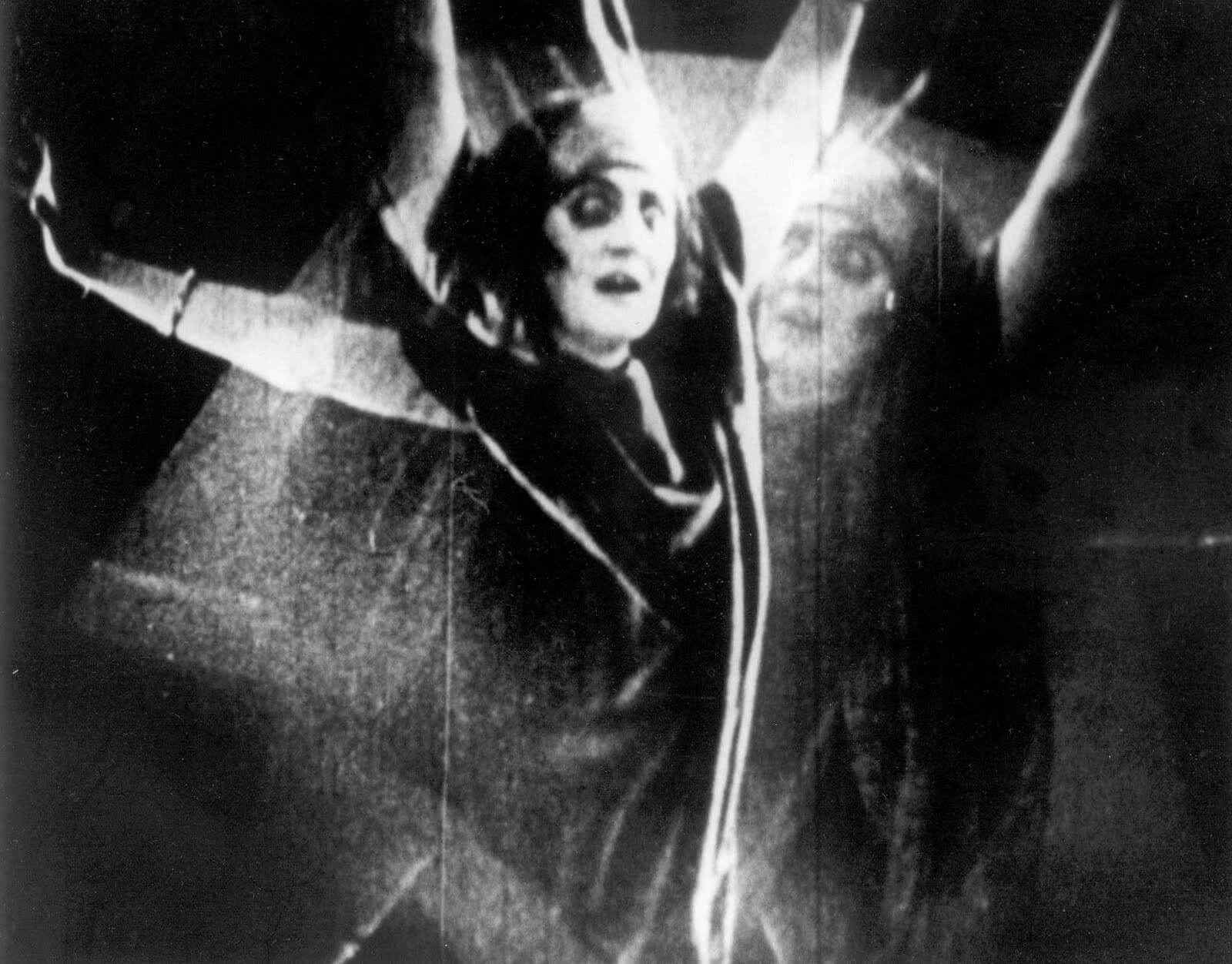
This 1928 American The Fall of the House of Usher is, like so many Poe adaptations, only very tenuously invested in the writer as anything more specific than a generalized canvas for exploring its own horrors. As with many later works, the story is more of a feeling to explore, not a doctrine to worship. But unlike most later Poe adaptations, this 13-minute terror of a film seems not only to reconstruct Poe’s story for its own purposes but to tear and stretch the medium of cinema itself to do its bidding. It suggests as much almost immediately, beginning with an image of Poe’s text that the film then slices to cinematic ribbons via its editing rhythms, a potent suggestion that this will be no mere exercise in mimetic replication. To destroy the text by exploring it deeply, to disintegrate its surface by finding new rhythms and meanings within it, is the film’s truth.
And even that seems like it’s granting the film too much intentionality. If anything, James Sibley Watson and Melville Webber’s kaleidoscopic miniature horror feels like silent cinema’s id unleashed on its own body, tearing the fabric of cinema to tatters, either the death spasm of an old style or the violent birth of something totally unforeseen. Veterans of silent cinema undoubtedly recognize German Expressionism when they see the first canted angle or acute triangle in the mise-en-scene, but The Fall of the House of Usher delves even further into a nearly psychotic willingness to remake cinema to its own liking. If Robert Wiene’s Caligari felt like a gothic mirror world of our own, or cinema’s cracked-mirror image, Fall is the hammer smashing the mirror, whacking at film’s very edifice again and again just to see what happens. It feels, genuinely, like cinema from another world, a film that sees cinema not as something to perfect but to tinker with.
The overwhelming sensibility of the film, then, is less a single style than an omnivorous, all-encompassing break from the cohesiveness implied in the very term style, twisting the knife into us with every cut. We begin with an unnamed “traveler” who begins the film by riding up to a gothic manse as an absent space, a shadow. We don’t see him enter, and, in fact, as soon as we enter, it’s to overlapping frames kaleidoscopically before a tear cuts the screen in half, the seeming establishing shot ripped to shreds. From there, we’re off, to the point where it feels like cinema itself is having its way with the characters via superimpositions, rotating frames, film cells seeming to zip and unzip like grinding gears, supple pans across luxuriant textures, stuttering, half-speed, refracted images repeating characters across the screen, backward images, floating textures trying to make their way across the screen. The film’s relative disinterest in really exploring the themes of the story via the characters, who are clearly just ciphers here, feel less like laziness or misreading than the opening of a mad portal, a carnival of the damned, where clarity of theme no longer matters. The film itself becomes the story, a circus of unhinged sensations and torrential emotions slashing at us. The house, and the lineage, falling into the ground at the end finds its echo in the house of film wrapping its tendrils around us, destroying itself with a mad obsession to discover the medium’s limits, even if it means dragging the medium to hell itself.
Score: 9/10
 The Long Take