
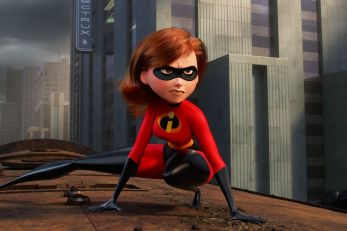
 Now that we’re firmly in the decade of Pixar shoring up its status with sequels to best-in-show properties rather than adventurously casting off its lot in less-rehearsed, more invigorating directions, we can at least be pleased that this particular sequel is an excuse for Brad Bird to return to the world of Pixar. Which, apparently, is a generally commensurable company to house his relentlessly optimistic aesthetic indulgences in the widest-eyed corners of mid-century Americana and pulp sci-fi. And house it does! While Bird’s good-natured futurism felt awkward while navigating the confines and demands of live-action cinema in the sometimes-effervescent, sometimes-cloying, sometimes-unwieldy Tomorrowland, there’s a natural mutability to animation that fits Bird’s relatively (and gloriously) surface-bound style like a glove.
And to the surprise of no one, aesthetically speaking, Incredibles 2 is a gas, the giddiest approximation yet of the gee-whiz mid-century spirit clearly percolating in Bird’s head since the halcyon days of The Iron Giant (to which, say, Adult Swim’s terrific cartoon The Venture Bros. is the cracked-mirror negative double). After a few mostly realist animated pictures, it’s deeply gratifying to see Pixar return to the deliberately frivolous, gleefully foolish cartoon style that dances so recklessly in Bird’s head, and which animated (excuse the pun) the spirit of many of their best films (Bird’s Ratatouille, most of all). It’s gloriously insignificant, as beholden aesthetically as narratively to mid-century pop serial storytelling and comic book absurdity, much more vigorously enlivened with comic book zest than any live-action comic book movie released in the past few years, save the Guardians duology. Continue reading
 I remain heartened months after its release that the internet spent a good few weeks desperately trying to shoot some adrenaline into cinema’s most deeply tiring franchise by convincing the world that Avengers: Infinity War was an experimental film of sorts, and how do I wish that little gambit provided more real food for thought than it does. It certainly does distract us from the actual film, which, as the claims of “avant-garde” suggest, only tenuously clings to that signifier “film,” or at least more tenuously than any blockbuster film is supposed to these days. But while, I don’t know, Speed Racer (all the way back from the inaugural year of the MCU) feels divinely inspired to dismiss the rules of blockbuster filmmaking as a moral and ethical statement, and an incendiary display of personal conviction, Infinity War isn’t a conventional “movie” out of some combination of laziness, failure, necessity, or simply because it can’t be bothered. That’s more or less interesting, and probably more fascinating to think through than an 18th entry into any franchise should be. But I can’t resist the sensation that I and the internet are playing head-games with ourselves to privately amuse ourselves, semi-ironically meditating on the norms of cinema with Infinity War as a catalyst just to pass the time searching for something, anything, to say about the most milquetoast cinematic franchise of the 2010s. The MCU has held modern blockbuster cinema prisoner for almost a decade, but, as if the delirium of no escape is kicking in, the voices of the internet refuse to give in. They resist.
  The Long Take