 This post in honor of the late Adam West, who is obviously an object of worship for the latest in a long string of Batman films and the closest to reignite West’s matter-of-factly deranged insouciance. It isn’t a perfect film, but it is a perfect tribute. RIP.
The first entry in Warner’s sure-to-drag-on-past-its-expiration-date Lego film franchise is not all that dissimilar from its progenitor race, 2014’s unexpectedly spirited, spiky, and whip-smart The Lego Movie. The Lego Batman Movie, perhaps expectedly, doubles down on both that film’s general vibe and its various specificities, including, unfortunately, corporate synergy. Grotesque product placement is de rigueur in this franchise. (Or is that character placement in this film? What does that say about the nature of individual consciousness when your protagonist is a product?). Conceptual thorniness aside though, The Lego Batman Movie is a generally sprightly and amusingly dysfunctional young upstart that feels just off-its-rocker and iconoclastic enough to not succumb to the realization that it is little more than a corporate gold-rush of marketing genius. Continue reading
 Really, the literary pretensions of the appended subtitle – a simple John Wick 2 will not do for director Chad Stahelski when the medium of Tolstoy and Dostoyevsky may be invoked – tell us everything we need to know about the regal aspirations of John Wick: Chapter 2. Although, in point of fact, it is not literature that is the guiding light of Chapter 2. The most overt antecedent is actually dance, especially if you solder the performance to the dexterous, lustrous lighting of an interactive art showpiece, leading to a film that is not unlike a work of immersive theater. Provided that it is immersing you into buckets of the red stuff of course. A good hundred or so people meet the nasty end of Keanu Reeves’ gun. And knives. And pencil. But it has the florid resplendence of Swan Lake. Somewhere, Wagner is probably smiling.
  One of our greatest directors, Jim Jarmusch’s only folly is also, typically, his greatest strength: a mantra of stylistic overtness, an inclination to pleasure himself with artistic beauty. Most evidenced in his recent Only Lovers Left Alive – a wonderful film that occasionally felt like a parody of a Jarmusch film – he cannot easily resist the lustrous glaze afforded by bold and brash stylistic provocation. In that film, he took the form of an aesthetic kinship with his subjects: withered, ailing souls subjecting themselves to a life of oppressively organized faux-clutter, basking in the ersatz-messiness of high-class low-class pretensions as they erect a wall of Bob Dylan records and Jean Pierre-Melville films to hide themselves form the world. To the extent that Jarmusch is akin to his specimens (and again, he’s among my favorite filmmakers), he risks aesthetic over-commitment and the cloying sedative of self-canonization, returning to his longtime well rather than introducing himself to the wider world away from his mind. It is telling that the protagonists of Lovers both look like Jarmusch and act his films and are, coincidentally, vampires that consume the past to hide their own lack of presence.
  Still agitated, still frustrated, and still trucking along for over a half-century, Britain’s resident muckraker and political Force To Be Reckoned With explores the tragedy of comedy, or the comedy of tragedy. It is, in short, an exercise in Loach Doing What He Does. Loach is among the fiercest leftists in modern cinema, and who am I to bemoan his semi-stagnancy as an artist? If I, Daniel Blake is still-water as far as artistic advancement is concerned, its nuances into the mind of oppression under late capitalism are uniquely advanced none-the-less. In other words, there’s no institution in I, Daniel Blake that Loach hasn’t agitated before, and agitated better. But he was a vanguard of leftist cinema once, and all these years later, he still seems like a lone pillar in an empty field, especially with the drop-off in serious leftist public scholarship these days. So if an artist repeating himself is all we can drag out of him … well, capitalism hasn’t exactly fixed its problems during Loach’s career, so there’s reason for him to keep hammering the same nails to make sure they continue to stay in place.
 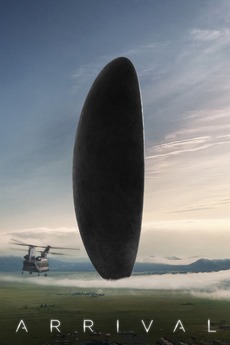 Director Denis Villeneuve is a difficult creature. Or, rather, he isn’t, but he sure thinks he is, which is what makes his academic, stiffly formal but not actually intellectual films so difficult to respond to. He’s a formalist, but an odd mark in that category. Certainly, he prefers a bold, singular, “visionary” image – one steeped in unblinking awe and gorgeous depth of Meaning – rather than a more open-minded or iridescent style that could provoke too many reactions, too much alterity, from audience members. Villeneuve’s films have “points”, and his style is buttoned-up and sculpted to guide his audience to that end destination along the path of least resistance, not to invite contradictory perspectives. The ambiguities in his films really are just gossamer sleights of hand, faux-intellectual jargon for people who equate superficial moral complication for genuine intelligence. However, his films also – up until Arrival – bore the caliber of a work-for-hire, a journeyman’s lack of overt stylistic manipulation, as though he was directing to the material rather than massaging the material to fit his interests, basically. Because of this, his films tend to coalesce around at an odd and incomplete gap, too baroquely stylized not to insist on themselves but not stylistically inflected enough to use their images to really challenge the cinematic status quo. He’s like an apprehensive, faint-hearted Kubrick, and who wants that?
  Girl meets guy. Girl falls in love with guy. Girl is Mia, a struggling actress played by a very-much-not-struggling actress Emma Stone. Guy is Sebastian, a poetically long-suffering jazz musician played by Ryan Gosling. Guy is also writer-director Damien Chazelle, who mostly just loves himself.
 Now that we’re firmly entrenched in the perennial-Star Wars churn of the Disney machine, director Gareth Edwards’ Rogue One: A Star Wars Story bears testament to the only true artistic value of Disney’s exercise: a chance to gouge Disney’s money to spread out not vertically – along one path – but horizontally, foraging through deepest, darkest corporate storytelling for shards of tonal variance and new moods that need not commingle with the main through-line. Every film need not follow the line of best fit, which allows for a franchise to stagger and ping-pong between tones wildly rather than chart a forward path that would surely become a funeral procession, at least artistically speaking. As a first blow though, Edwards latches onto the asphyxiated, battered, worn-out world of the original film to germinate Rogue One into a supernova of bruised beauty wracked with undertows of ambivalence about its own obvious oncoming, fated conclusion. Ironically, it is by returning to the franchise’s roots – and pulling them up to expose the dirt-encrusted thorns – that Rogue One keeps the franchise from ossifying into arrested development.
 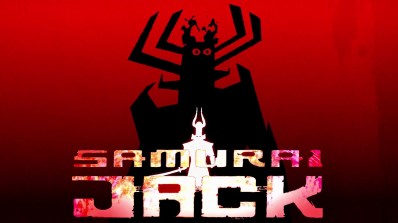 Much hullabaloo has been made about season five of Samurai Jack’s serialized nature. And why not? Serialization is the mantra of our time, the de rigueur shorthand for maturity in the televised world and the essence of respectability for a culture almost hermetically obsessed with the lexicon of long-form storytelling. The prestige TV glut of the past twenty years has almost uniformly been filtered through the quasi-hegemonic logic of the linear story, of spreading out storylines in the name of events causing events causing more events. More time means more conflict, more space to accrue information, more room to define everything and leave nothing ambiguous or uncertain. It conjures a wider cavern to fill in causes, effects, consequences, obstructions, and solutions. It feeds into a cultural desire to trace increasingly complex, labyrinthine plots and prove ourselves as viewers by untangling the thorns of a narrative.
  Freud and Superman and Fellini and sleaze-house dens all make walk-on appearances just in the introductory passages of Brian de Palma’s Hi, Mom!, a quasi-satire, or at least a loosening up of, the malevolent Hitchcockian Rear Window. A bizarre-world antecedent to Taxi Driver, this is a film with Robert De Niro obsessively subjecting New York to his viewfinder until he is himself victim to and participant in an artistic nightmare. Relentlessly aware of its own spectatorship and shot-through with neurotic ambivalences, the film always has film on the brain, and the muscles, and the loins. But De Palma refuses to rest on this tried-and-true meta-textual laurel, instead wandering off – skipping, even tumbling – in untold and untested directions. Call him a Hitch parasite all you want, but Hi, Mom! commandeers Hitch for its own sinful purposes.
  Hectoring becomes a professional endeavor, or professional filmmaking becomes a form of hectoring the audience in John Huston’s whacked-out Beat the Devil, entirely denounced when it was first released and somehow bent and mutated even further sixty four years later. Temptation begs that I reclaim the film by arguing that it was “misconstrued’ upon release, but I’m not entirely certain it exists to be construed. That might only breed domestication, curbing the film’s vigorous unruliness. With a regular goon squad of odd cartoon shapes masquerading as people waiting around in a squalid sea-port town, the whole film seems to exist to breathe in the salt water. The most exciting moment is entirely about an aging, wheezy Bogart and a pair of portly fellows schlepping after a runaway car, teasingly dramatic music massaging out the irony of their failure to exert more than a modicum of effort. It’s awkward, heinous, mismatched, and oddly brilliant in its idiom.
  The Long Take