
 Edited
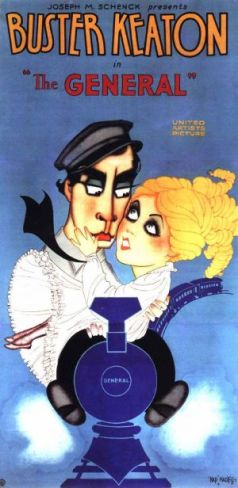
Above all, Buster Keaton’s The General is a caricaturist cartoon scrawl of history, a historical epic tethered to, and upended by, the hair-raising hare Bugs Bunny. Unmolested by the burdening weight of its importance, The General is Keaton’s excuse to raise a ruckus with the past, to twist the partitions of memory, and to alloy historical event to a study in stasis and kinesis with the primordial essence of pure cinema. The presumption of operatic diction and molasses-thick sobriety assumed in most waxworks-show historical cinema – often obelisks to history rather than living and breathing exercises in movement with history – is but a distant rumor in Keaton’s phenomenally unpretentious explosion of screen momentum.
In a film beset with, or at least erupting from, the Lost Cause ideology that the South’s loss was a tragic failure of valiant rebels standing up for their beliefs, the two primary causes for Johnnie Gray (Buster Keaton) are his two lifehood loves, his train that he repairs by day and his female companion Annabelle Lee (Marion Mack) he woos by night. His life is tarnished when she rescinds his offers once the Confederates refuse to enlist him due to his importance as an engineer. When his beloved train is stolen by Yankee spies, Gray is whooped and hollered into action to retrieve it almost in spite of himself, acting almost without visible emotional comment in his face. Early on, the world, even his own actions, coast by him with a certain predetermined status, like he is part of an unthinking tapestry rather than an active participant in the world. Until, of course, Johnnie becomes a human mid-way through, a transition with vastly more complicated and foundational reflections on American politics, cinema, and social assumptions than even the film’s revealing connection the the Confederacy. But we’ll get there before the review’s end. Continue reading
 In Frank Borzage’s 7th Heaven, much like F.W. Murnau’s Sunrise from the same year, and same production company, the mettle of duality and human romance is energized with cinematic luminescence, ultimately transforming togetherness into a prism for enlivening the world and lighting the way to an otherworld that, not heaven or hell, is more akin to the resplendence of worldly beauty itself. Producer William Fox was a sky-high romanticist with peaceful, radiant aspirations for humankind both exhibited within his films and enshrined in their making-of stories. Unlike many Hollywood producers quite this early on, he chose to jump the Hollywood ship of home-grown talent by acquiring some of the most rapturously received European auteurs for his productions with the quixotic belief that his production company’s cinema should be unrestrained and untrammeled on by national borders.
  Agitprop as festivity more than hoosegow, Sergei Eisenstein’s first film is also his most disarmingly pure and innocent in its desire to agitate not only society but cinema, a film thoroughly unmitigated by its own weight and purpose. The perpetual penitentiary many modern viewers discover when viewing Eisenstein’s unmistakably political films is replaced with a kindled carousel of motion and action, reaction and consequence, that feels not only undated but more progressive and alive with possibility than any film released in the 2010s. A freedom-fighting film that, in a fit of art imitating the dreams of a life that never came to exist, feels palpably liberated from the cinematic status quo. Rather than merely political critique, Strike is a filmmaking polemic, a hustle-and-bustle strike of inventive cinematic mechanisms enlivening the passé “historical cinema” genre that was often as inept and anonymous then as it is now.
 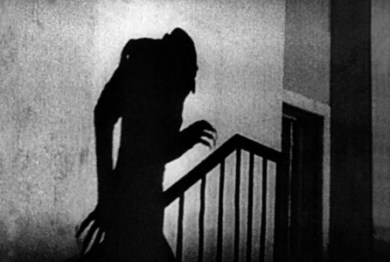 As the ur-horror film and the first masterpiece from the second visual master of the cinema (tied with Eisenstein; Griffith was the first) Nosferatu could crumble under the surfeit of weight on its back. And, like a steadfast Atlas, it holds up the earth with the gravid, implacable charisma of an obelisk absorbing a totem pole. F.W. Murnau’s incandescent grasp of cinema as a mythical creation capable of inscribing dreams and nightmares in the sky had not yet been matched by anyone in the medium (rather than achingly poetic dreams on alternate planes of reality, Griffith’s and Eisenstein’s films were more monumental architecture, or theater and dance respectively to crib from Godard). And, without much squinting, it’s almost as easy to claim that no one has actually dreamt Murnau’s dreams as well as Murnau in the 85 years since his untimely death.
 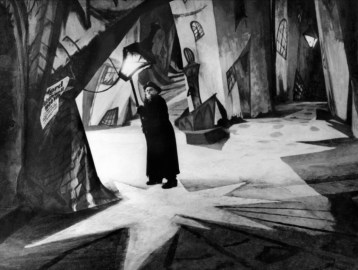 The, ahem, “mindfuck” movie is more or less a reputable genre these days, having twenty years ago adopted a throne in the highest echelon of the cinematic kingdom, at least in the minds of adolescents and high-school film-major-wannabes all across the land. You know, the kind who just can’t wait to tell you about how Fight Club is a metaphysical tract raging against the dying of the individualist, anti-social light or how The Matrix excavated a new world of possibility and mental-architecture and Laurence Fishburne’s voice is so gravelly and sonorous and important so we need to pay attention to it because Morgan Freeman in The Shawshank Redemption. And Stuff.
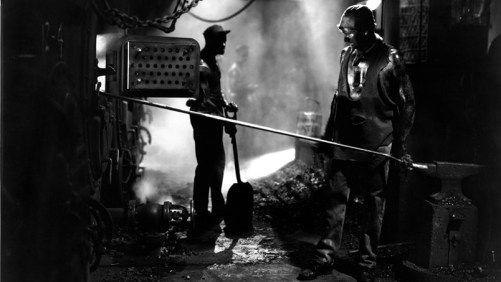 A tempest of Murnau, Borzage, and Griffith with its own achingly sensual, mist-shrouded, potently translucent vision of city life and the mystique of human desire, Josef von Sternberg’s The Docks of New York is one of the pinnacles of American silent drama in the year of its acme. Which was, coincidentally, the year of its sputtering death throes, almost as if the pre-sound era was firing on all cylinders to stave off the phantom of sound, to preserve the crystalline purity of the visual medium and acclimatize viewers to the potency of the screen itself, and, above all, to throw itself the most divine combination going-away party and sarcophagus it could muster from its own hands. If so, Victor Sjöström’s The Wind might be the mortal specter of tenuous life, the skeleton in the casket, and Murnau’s Sunrise could be the grand, angelic denouement, the swooping saving grace to send the silents off to Asgard or some other heavenly resting place after being tempted by fate. I think it fitting that The Docks of New York would only ever take pride of place at silent cinema’s funeral as the drunken after-party, with the blissful ignorance of acceptance slurring around a fear of the future that is still waiting in the wings.
  Temptation begs to flatten G.W. Pabst’s Pandora’s Box by giving it a moralizing voice or treating it as a statute on character worth, in doing so succumbing to the bourgeois decree to dress up the film in airs that Pabst, and certainly main character Lulu, have no earthly use for. Played by Louise Brooks in a phenomenal tantrum of a performance at the heart of what is inherently a melodramatic sideshow of a film, Lulu is a man-killer and an earthquake but also an embodiment of the implacable drive to not only persist but discover oneself at the heart of the human condition. In a world that is a playground and a hot-house of self-discovery and self-preservation, our earthen notions of morality don’t really apply.
  Slinky and unruly by the standards of its time, Rouben Mamoulian’s Applause – a stepping stone onto a proficiently very good if seldom great path as a cross-pollinating genre director – opens with its camera not only on the move but on the war path to prove the director’s ambition. Even the intro’s deceptively near-silent implementation of sound in the far off distance intimates that this is not a complacent motion picture by 1929’s standards. The roving camera more or less an ingrained tool by 1929, it was nonetheless not yet a known quantity, and sound was never as vigorously applied before as it would be in this feature. This knowledge in tow, Applause is a film that obviously shows Mamoulian, in his debut feature, was ready to go to bat with the future of film in his hands.
  Legend has it that Luis Buñuel chased partner in crime Salvador Dali off set once the painter – on sabbatical to help discover the possibility of the relatively new medium of film – had done his dirty work helping the madman director renegade against The Powers That Be with the screenplay for L’Age d’Or. Verification of the tall tale or not, the exuberance of the overstatement is appreciated in a film with a ramshackle, manic, antic enough demeanor and a will to treat subtlety as a devout enemy at the gates of its own hyperbolic, spasmodic mind. The story may be a fabrication, but the spirit of it rings true in the gloriously impulsive film the two men produced, a work that files a restraining order against the idea of restraint itself.
 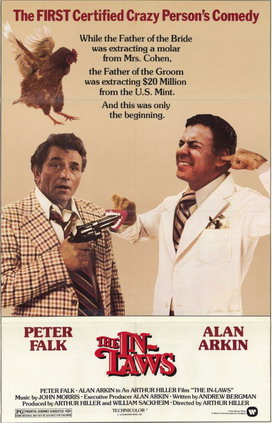 Central Intelligence is, I am told, a movie about two buddies, one domesticated and the other an epidemic, where one is just maybe an insane rogue agent. Let us look at a much better such film that is mostly forgotten today (and, I must admit, one that is cartoonishly better at evoking the off-kilter is-he-or-isn’t-he-crazy tension that the 2016 half-heartedly, impersonally wishes to suggest).
 The Long Take